Be Your Evolution AI News Daily
Five fresh signals. Five durable tools. No hype tax.
Top 5: New and Worth Your Attention
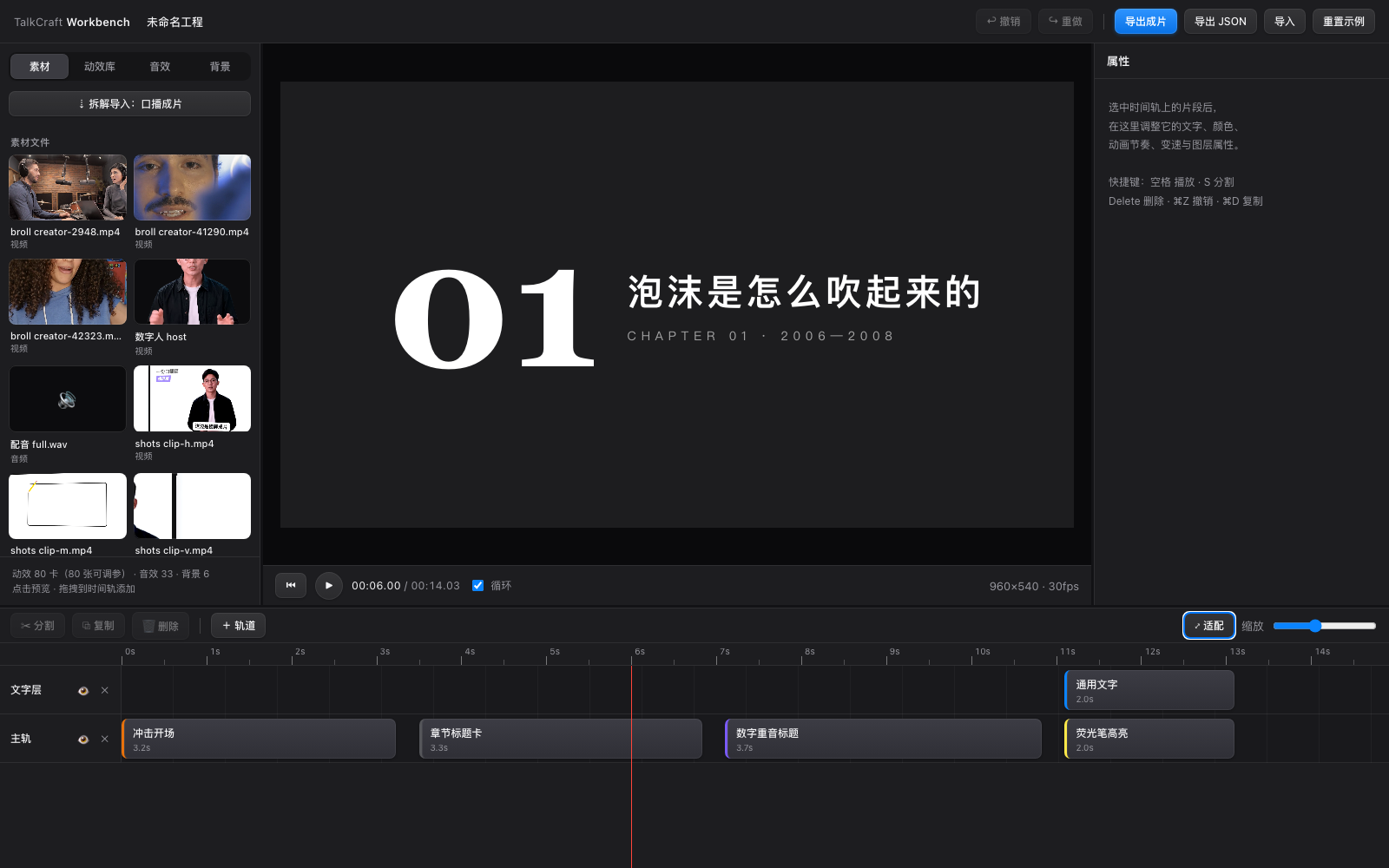
1. video-talkcraft
video-talkcraft is an agent skill for turning a finished voiceover and script into a synchronized Remotion explainer. Its September 2 update adds a multitrack workbench, parameterized motion cards, partial rerendering, contact-sheet review, and a one-pass delivery gate. Jason’s strongest test is a short narration with two evidence screenshots: let the skill produce the shot plan, render, and review sheet, then judge whether the pacing feels authored rather than assembled.
OPERATIONAL VALUE
Compresses storyboarding, motion design, timing, rendering, and visual QA into one repeatable local workflow.
QUICK VIDEO
Feed it a 45-second voiceover, then reveal the shotbook, multitrack workbench, contact sheet, and final synchronized clip.
Reality: Requires Node.js 18+, Python 3.10+, ffmpeg, and either a 767 MB FireRedASR2-CTC download or the Whisper backend. The repository uses the PolyForm Noncommercial license, so it is source-available for permitted noncommercial use, not open source; Remotion and asset licenses also apply.
OPEN PRIMARY SOURCE →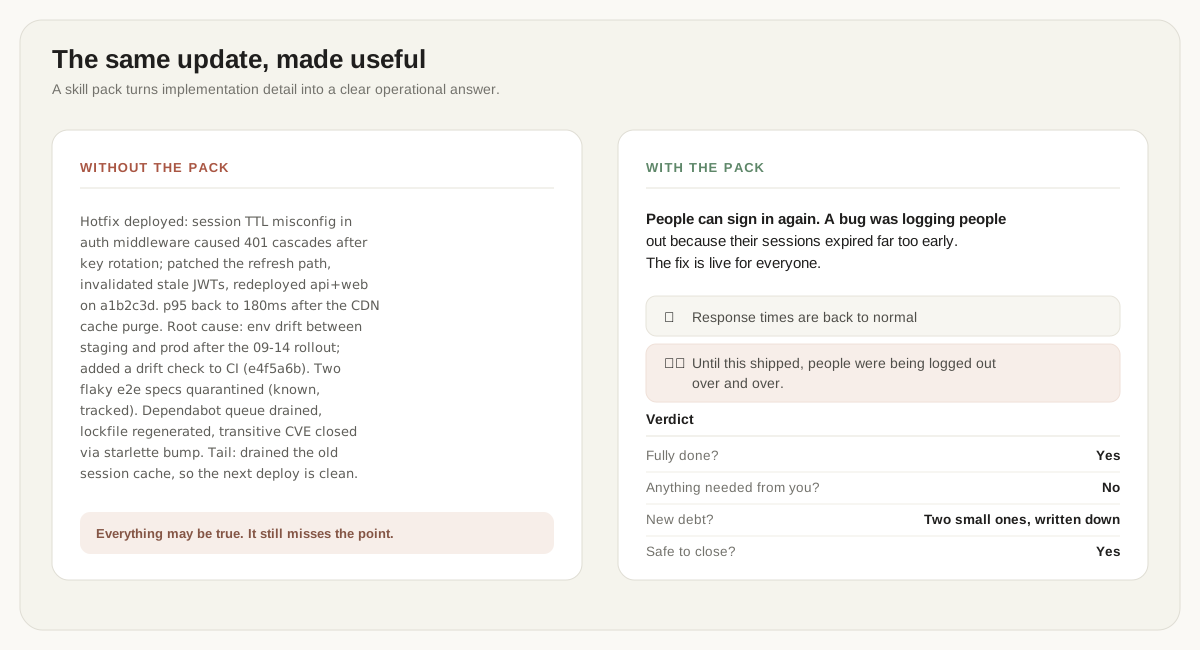
2. Open Steps
Open Steps is a small skill pack that makes coding agents report outcomes in plain language: what changed, whether the work is truly finished, what remains risky, and what the operator should do next. That sounds cosmetic, but it closes a real control gap for non-engineers managing autonomous work. Jason can test it without touching production: give the same completed task to an unmodified agent and an Open Steps-enabled agent, then compare clarity, honesty, and decision usefulness.
OPERATIONAL VALUE
Turns technical agent output into concise completion verdicts, visible caveats, and actionable next steps.
QUICK VIDEO
Show one confusing completion report, install the pack, and replay the same facts as a plain-English done-or-not verdict.
Reality: Claude Code receives the fullest plugin and hook integration. Codex, Cursor, and Gemini CLI can use the skills, but routing needs manual setup and behavior still depends on the underlying model. The repository is MIT open source; connected agents and models retain their own terms.
OPEN PRIMARY SOURCE →3. huashu-excel
huashu-excel is an agent skill built around a disciplined spreadsheet sequence: inspect the raw cells, identify headers and subtotals, clean deliberately, reconcile against in-sheet totals, and refuse final figures when the master check fails. The practical appeal is traceability, not magical analysis. Jason could give it a deliberately messy workbook with merged headers, copied rows, and subtotal lines, then inspect whether every transformation and reported number can be followed back to source cells.
OPERATIONAL VALUE
Adds an auditable inspection, cleaning, reconciliation, and delivery method to agent-assisted spreadsheet work.
QUICK VIDEO
Ask for January sales from a dirty sheet, expose the naive overcount, then show the skill catching subtotals and duplicates.
Reality: The documentation and report language are primarily Chinese, and the skill’s conclusions still require human review before financial or operational use. Installation is agent-agnostic and its stated runtime dependency is openpyxl. The repository is MIT open source; the workbook data and any connected model remain separately governed.
OPEN PRIMARY SOURCE →4. Halofy
Halofy proposes one governed context layer for many agents: server-resolved identity, namespace access controls, provenance, append-only audit, semantic retrieval, and signed erasure over MCP or HTTP. Its offline demo uses embedded PGlite; durable self-hosting moves to Postgres and pgvector. The idea is timely for teams whose agents otherwise invent separate memory silos. Jason should run only the included demo first and inspect denial, audit, and deletion receipts before considering real organizational data.
OPERATIONAL VALUE
Could centralize who agents are, which context they may read, and how every context change is audited.
QUICK VIDEO
Run the offline demo, show one allowed read and one denial, then verify the signed erasure record.
Reality: This is young governance infrastructure, so architecture claims need adversarial testing before trust. The local demo needs Node tooling; durable operation adds Postgres, keys, backup, restore, and policy work. The repository is AGPL-3.0 open source; optional model APIs and deployment infrastructure have separate costs and terms.
OPEN PRIMARY SOURCE →5. YouTube Pro
YouTube Pro combines public YouTube metadata, grounded Gemini analysis, idea selection, script writing, a teleprompter, and thumbnail generation in one local-first workspace. It keeps a visible evidence ledger and distinguishes observed data from inference or metrics that require YouTube Studio. For Jason, that is more useful than another generic trend generator. Test one narrow search, trace three recommendations to their source videos, and reject any insight that outruns the returned public snapshot.
OPERATIONAL VALUE
Connects research evidence to video ideas, scripts, presentation, and thumbnail packaging without losing the source trail.
QUICK VIDEO
Research one topic, open the evidence ledger, choose an idea, and carry it through script and thumbnail in one take.
Reality: Requires Node.js 22.12+, a YouTube Data API key, and a Gemini API key; searches consume quota and AI routes may cost money. It binds locally by default and should not be exposed directly to the internet. Apache-2.0 code is open source; Google services, outputs, and uploaded references remain separately governed.
OPEN PRIMARY SOURCE →5 Proven Classics
A mature Python framework for role-based crews and deterministic flows. MIT core code is open source; hosted CrewAI AMP, model providers, observability, and production operations remain separate decisions.
Source →Typed dependencies, structured outputs, model portability, and a built-in test model make this a strong Python choice when reliable interfaces matter. MIT code is open source; providers remain external.
Source →A widely adopted Python layer for agents that click, type, and extract in browsers. MIT code is open source; browser profiles, credentials, hosted cloud, and model costs need controls.
Source →Its visual builder remains useful for learning, testing, and exposing agent workflows as APIs or MCP tools. MIT code is open source; connected models and production infrastructure are not.
Source →A practical local-first workspace for document chat, agents, model routing, and multi-user deployments. MIT application code is open source; selected models, embeddings, and hosted options carry separate terms.
Source →Reality Check
Open repository code does not make provider APIs, model weights, uploaded data, media assets, or generated outputs unrestricted. video-talkcraft is source-available under a noncommercial license, not open source. Open Steps has uneven host integration. huashu-excel still needs human verification. Halofy is security-sensitive infrastructure. YouTube Pro depends on paid or quota-limited Google services. Trial all five on disposable data before connecting production accounts.
Bottom Line
Try Open Steps first: it is small, reversible, and directly improves how agent work is judged. If content production is the priority, test YouTube Pro on one narrow topic next. video-talkcraft has the strongest visual demo, but confirm its noncommercial license fits the intended use before investing.
Primary-source research completed September 3, 2026. Private Be Your Evolution field guide.