Be Your Evolution AI News Daily
Five fresh signals. Five durable tools. No hype tax.
Top 5: New and Worth Your Attention
1. Agent Config 14.23.0
Agent Config distributes skills, rules, commands, and governance into multiple coding-agent hosts, then uses validation and hooks where supported to make “done” more testable. Release 14.23.0 adds code-graph queries for impact, tests, untested code, and dead code, alongside continuity and regression-selection work. Jason can start with the read-only production-validator example on a disposable branch and compare its evidence with the agent’s original completion claim before considering the much larger configuration layer.
OPERATIONAL VALUE
Offers one versioned policy and skill layer across several agent tools, with explicit checks that can challenge weak completion claims before they reach review.
QUICK VIDEO
Ask an agent to call a branch finished, run the read-only validator, and show the missing test or evidence that changes the verdict.
Reality: The repository is MIT open source, but it is a broad, fast-moving system with invasive configuration potential. Version 14.23.0 reports 22,463 tests, yet its own release notes document recently repaired governance regressions. Dry-run installation, choose one project-local scope, inspect generated files, and keep the host agent’s model, provider, and permission terms separate.
OPEN PRIMARY SOURCE →
2. Super Prototyping
Super Prototyping turns reference screenshots into plain HTML artboards on a local tldraw canvas, pairing agent skills with measurement, cropping, generation, and visual-diff tools. The important idea is traceability: colors, spacing, type, and image placement are tied back to observed geometry instead of vague visual imitation. Jason can reproduce one small mobile screen, inspect the measurement grid, and use the diff view to decide whether the result is genuinely close before adapting it into an original layout.
OPERATIONAL VALUE
Creates an inspectable reference-to-prototype workflow that can reduce design guesswork and produce editable HTML rather than a flattened mockup.
QUICK VIDEO
Capture one app screen, measure its grid, generate the artboard, then reveal the pixel-diff pass and the corrections it forces.
Reality: The repository is Apache-2.0 open source and currently has no tagged release. The full checkout is large because it includes examples, the canvas installs dependencies on first run, and tldraw carries its own license. Reference captures may contain copyrighted designs or private data; use them for analysis and transformation, not unlicensed copying.
OPEN PRIMARY SOURCE →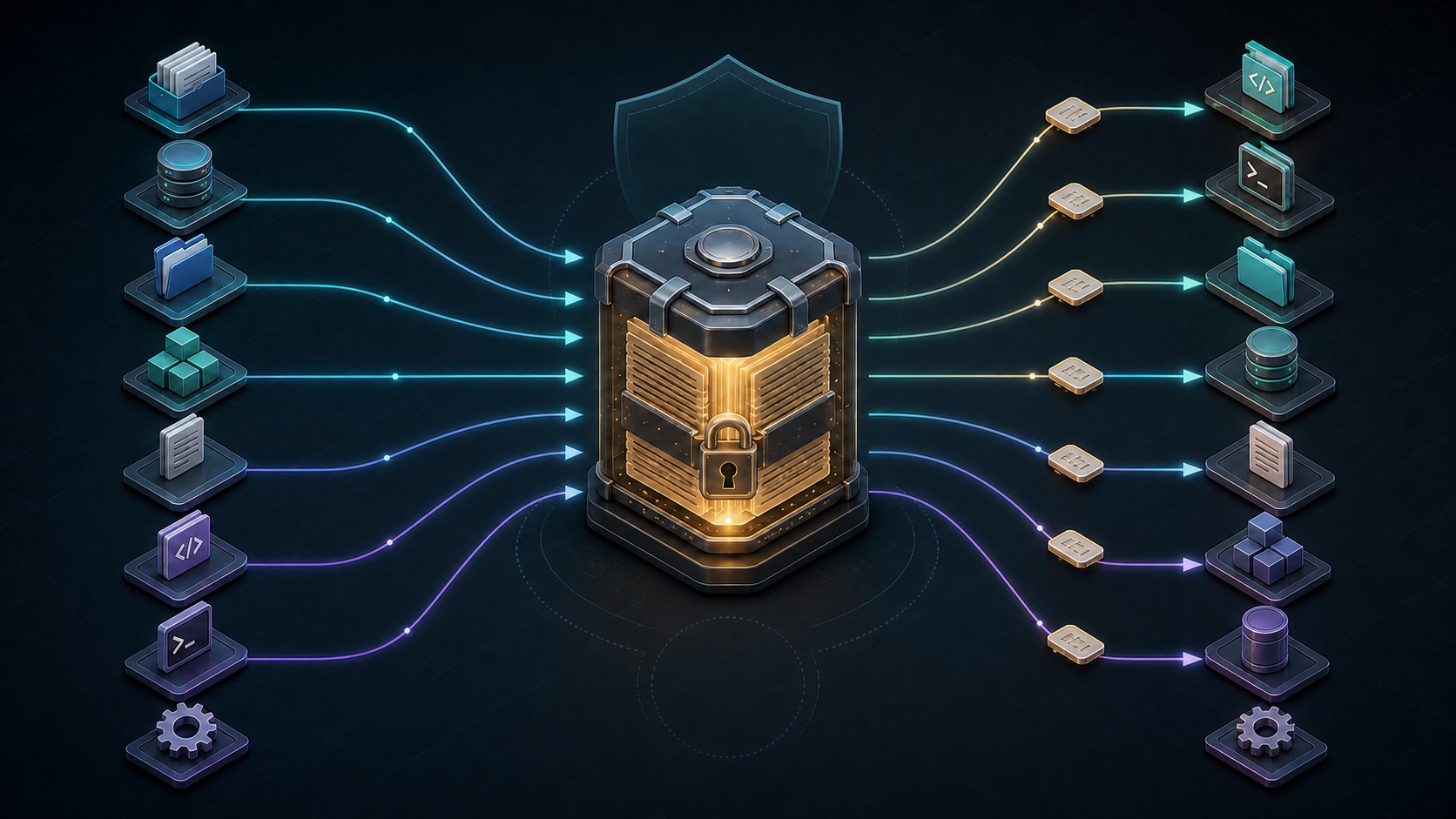
3. Portable Resume 0.4.4
Portable Resume reads bounded context from local coding-agent history stores and packages it for a fresh session without invoking the source agent or adding a network path. Version 0.4.4 improves Windows portability, exact-version discovery, activation evidence, and installer path handling. Jason can hand one completed Codex task into a fresh agent, compare the recovered decisions with a manual summary, and see whether the explicit “untrusted and stale” boundary prevents old session text from quietly becoming authority.
OPERATIONAL VALUE
Makes cross-agent continuity more deliberate and auditable while leaving original history stores unchanged and avoiding a cloud synchronization service.
QUICK VIDEO
Close a coding session, open a different agent, recover the sealed context locally, and verify which decisions survived the handoff.
Reality: Version 0.4.4 is Apache-2.0 open source and requires Python 3.11 or newer. Its published compatibility matrix is broad, but the maintainers explicitly say Windows does not receive the full 306-cell runner matrix and several host-native activation paths remain untested. Session histories can contain secrets; inspect and redact every handoff before reuse.
OPEN PRIMARY SOURCE →
4. ThumbGate
ThumbGate is a deterministic pre-action layer for agent tool calls. It hard-blocks detected secret leaks and direct self-disable attempts by default, while destructive shell patterns and guardrail edits initially warn and log unless strict enforcement is enabled. Feedback can become local prevention rules and evaluation cases. Jason should wire it in detection-first mode, deliberately trigger harmless fixtures, and examine false positives before allowing any learned rule to block real work across Codex, Claude Code, Cursor, or another host.
OPERATIONAL VALUE
Adds a local, inspectable checkpoint between an agent’s proposed command and execution, with reusable lessons built from concrete failures rather than model retraining.
QUICK VIDEO
Attempt a fake secret leak and a safe force-push fixture, then compare the default block, warning, audit trail, and strict-mode behavior.
Reality: ThumbGate is MIT open source, but the latest tagged release is 1.36.1 from August 28 while the main branch has continued moving. A matching rule is not proof of malicious intent, and an unmatched command is not proof of safety. Pin a version, keep the dashboard local, test on fixtures, and preserve the agent host’s own approvals.
OPEN PRIMARY SOURCE →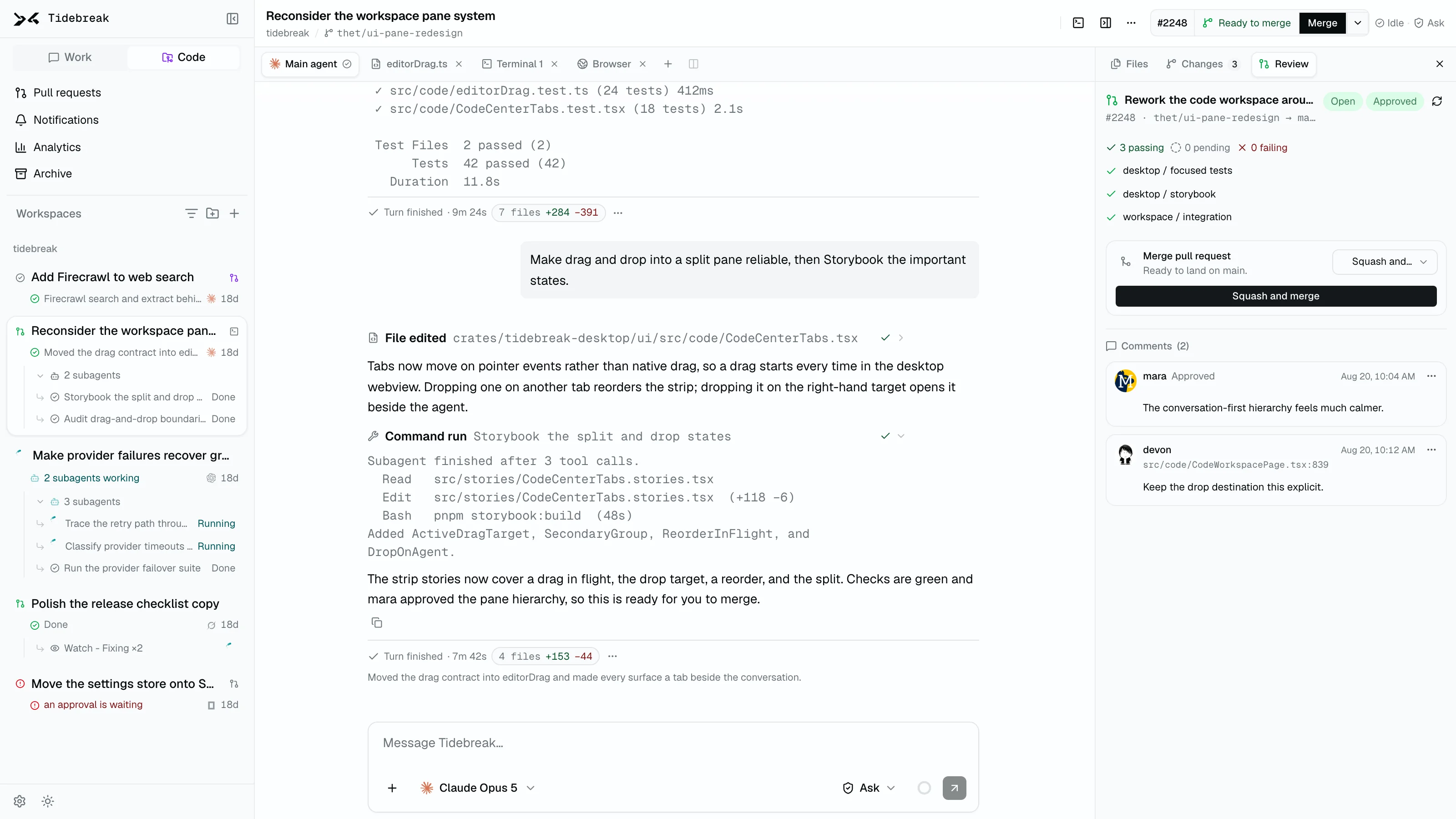
5. Tidebreak 0.97.0
Tidebreak is a local-first desktop workspace around existing coding agents, adding isolated Git worktrees, diffs, terminals, browser testing, pull-request state, CI repair, approvals, and durable tasks. Version 0.97.0 exposes bound approval details to channel adapters. Jason can connect a throwaway repository, run Codex in an isolated worktree, and inspect the entire prompt-to-diff-to-check path before deciding whether a second orchestration desktop adds enough clarity beyond his current Codex workflow.
OPERATIONAL VALUE
Consolidates agent execution, review, CI, and delivery around isolated branches, making long-running coding work easier to inspect without touching the primary checkout.
QUICK VIDEO
Give two agents separate worktrees, show their diffs side by side, then follow one through checks and a human-triggered merge decision.
Reality: Tidebreak is Apache-2.0 open source and explicitly pre-1.0; interfaces and local data formats may change. It can download supported agent engines, while sign-in, subscriptions, API keys, model use, Git hosting, and external research providers remain separately governed. Start with a disposable repository and review every requested permission and credential-store entry.
OPEN PRIMARY SOURCE →5 Proven Classics
Promptfoo remains a practical MIT-licensed harness for comparing prompts, models, agents, and RAG behavior in repeatable tests. Provider terms, test data, red-team scope, and CI secrets still need separate governance.
Source →Weaviate still combines vector search, objects, and structured filtering in a mature BSD-3-Clause database. It suits retrieval systems needing a service layer; embeddings, data governance, backups, and hosting remain yours.
Source →Milvus remains a strong Apache-2.0 option for large-scale vector search when an embedded index is no longer enough. Its distributed architecture brings operational complexity, capacity planning, monitoring, and upgrade work.
Source →FAISS remains an efficient MIT-licensed library for dense-vector search and clustering, especially for local experiments and custom pipelines. You supply persistence, metadata filtering, serving, backups, security, and embedding governance.
Source →Ray remains a capable Apache-2.0 compute engine for scaling Python and AI workloads across machines. Adopt it when distribution is real, because scheduling, cluster security, observability, and failure recovery add substantial overhead.
Source →Reality Check
Today’s ten codebases are open source, but licenses differ: MIT, Apache-2.0, and BSD-3-Clause. Those licenses do not grant rights to model weights, hosted APIs, captured product designs, private session logs, or third-party data. Agent configuration packages and pre-action hooks can alter local tool behavior; history migration can surface secrets; worktree managers still operate on real repositories; and distributed data systems create operational obligations. Use pinned versions, disposable projects, redacted fixtures, least-privilege credentials, and human review before production adoption.
Bottom Line
Try Portable Resume first: a small, local handoff test directly answers whether context can move between agents without becoming a privacy or authority problem. Then use Super Prototyping on one reference screen because its measurement-and-diff discipline is visually demonstrable and useful beyond AI hype. Keep Agent Config and ThumbGate in controlled evaluation until their configuration and enforcement behavior earns trust; consider Tidebreak only if its unified review surface improves on the workflow you already have.
Primary-source research completed September 9, 2026. Private Be Your Evolution field guide.