|
B.Y.E. / DAILY AI TRY / 10.14.26
Be Your Evolution AI News DailyOctober 14, 2026 · Five newer tools explored, five proven classics worth keeping Top 5: New and Worth Your Attention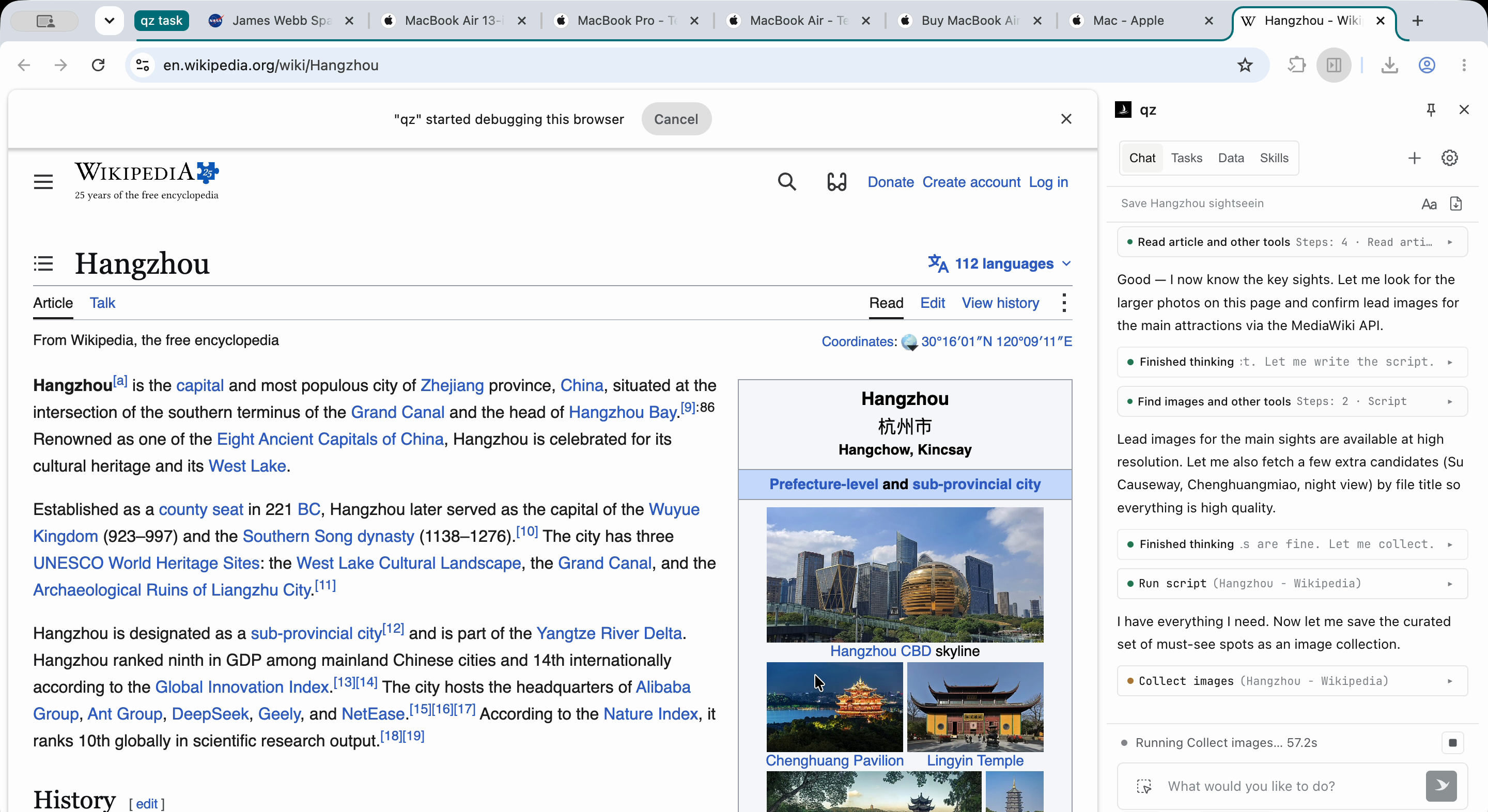 WORTH A LOOK 1. qz Browser Agent 0.1.0Alibaba’s qz is a local-first Chrome extension that can research across tabs, automate pages, collect structured data, delegate parallel subtasks, and expose controls through an optional MCP bridge. Sessions and collections stay in the browser, while you choose the model provider. For Jason, the practical test is a repeatable research pass that gathers official project details into a table without handing the whole job to a remote browser service. OPERATIONAL VALUE QUICK VIDEO Reality: qz is Apache-2.0 open source and version 0.1.0 is an early release. Installation currently means loading an unpacked Chrome extension; building requires Node.js 24 LTS. Page content, screenshots, tab data, and authorized browser information can be sent to the model provider you configure. Skills can execute JavaScript in pages, and MCP expands control further. Use a separate browser profile, review permissions and imported skills, limit credentials, and begin on non-sensitive sites. OPEN PRIMARY SOURCE → TRY NOW 2. Coucou 0.3.0Coucou watches coding-agent sessions from a small desktop companion and surfaces status, file changes, permission prompts, and questions without forcing you back into each terminal. It supports Codex, Claude Code, Cursor, Gemini CLI, Hermes, and others across macOS, Windows, and Linux, with phone links on supported setups. Jason could use it as a lightweight attention layer: see which agent is waiting, inspect the request, and approve or deny deliberately. OPERATIONAL VALUE QUICK VIDEO Reality: Coucou’s code is MIT open source, but its name, Mochi character, and sounds remain copyrighted. Platform capabilities vary substantially; some chat, integrations, voice, and phone behaviors are macOS-specific, while Android pairing currently targets Windows or Linux on the same network. Remote approval is high consequence even with biometric checks. Verify the exact command on the computer, keep phone linking off unless needed, use read-only service keys, and test notification routing before relying on it. OPEN PRIMARY SOURCE → TRY NOW 3. Oil UI 0.22.4Oil UI is an agent skill that pushes interface work through distinct visual directions, side-by-side comparison, screenshot-based refinement, and an explicit review score. It works with Codex and other skill-aware coding agents and needs no project-specific configuration. The useful experiment for Jason is concrete: give the same landing-page brief three ways, compare hierarchy and tone in one generated page, then refine the strongest direction against a real browser screenshot. OPERATIONAL VALUE QUICK VIDEO Reality: Oil UI’s open version is MIT and requires Python 3. Its Pro edition is a separate paid product with deeper usability, polish, and revision features, so the open skill does not include every capability shown in the comparison. By default the skill checks a public version list at most once every ten minutes and uploads no project data; 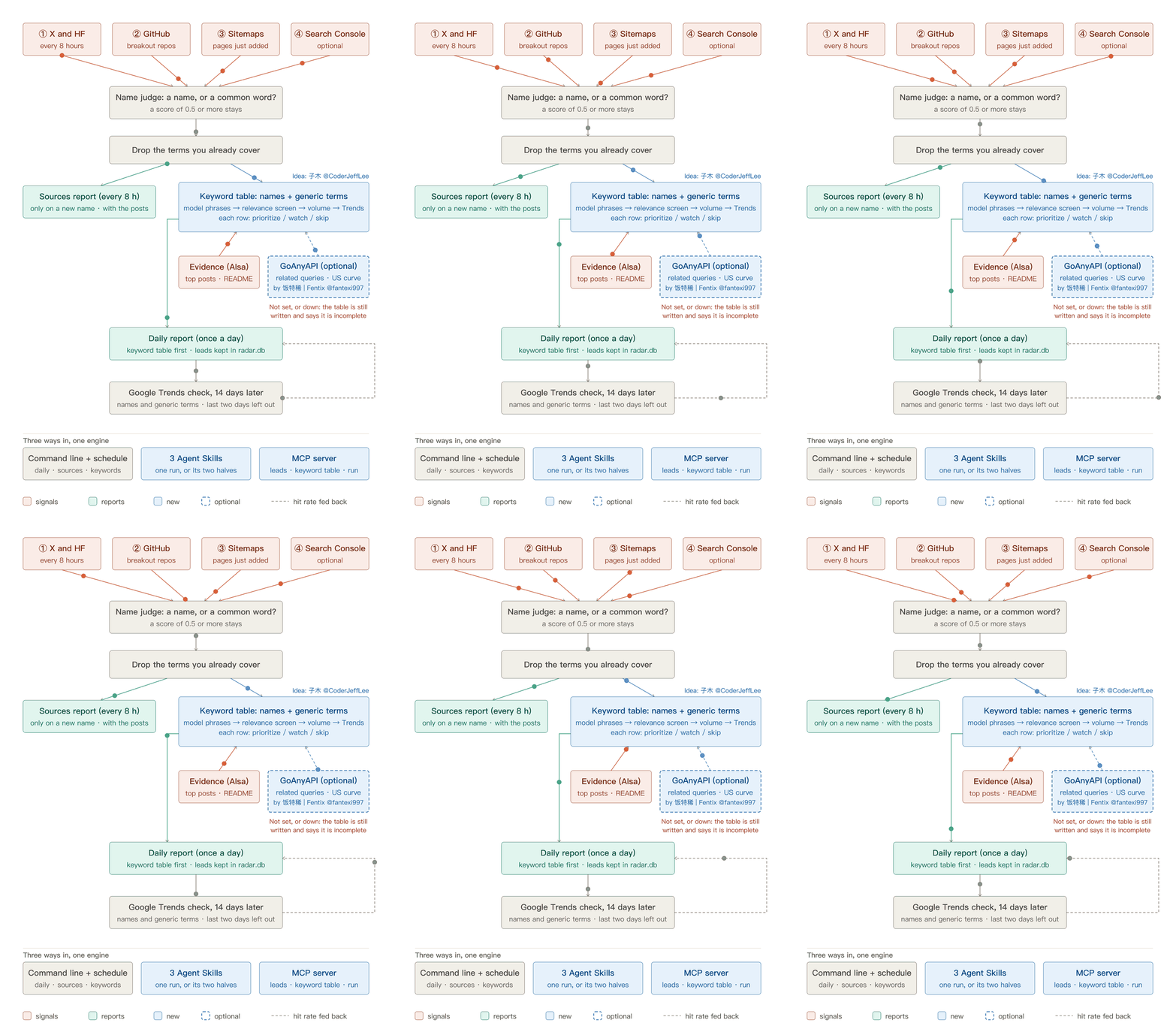 WORTH A LOOK 4. New Term RadarNew Term Radar watches first appearances and breakouts across selected X accounts, Hugging Face, young GitHub repositories, sitemaps, new domains, revenue listings, Search Console, and later trend checks. It outputs Markdown and JSON and includes agent skills plus an MCP server. For Jason, its strongest use is upstream discovery: build a daily candidate list for newsletters, then keep human research focused on primary sources rather than treating the radar’s scores as publishable facts. OPERATIONAL VALUE QUICK VIDEO Reality: The code is MIT and requires Python 3.10+. Free signals work without a key, but X, Google Trends, domain data, name judging, and keyword sizing depend on paid AIsa calls; optional GoAnyAPI, Search Console, Resend, and GitHub credentials add separate services and privacy considerations. The repository reports its own detection examples and costs, not independently validated accuracy. Start with free inputs, lock configuration and state files down, and never publish a scored lead without primary-source confirmation. OPEN PRIMARY SOURCE →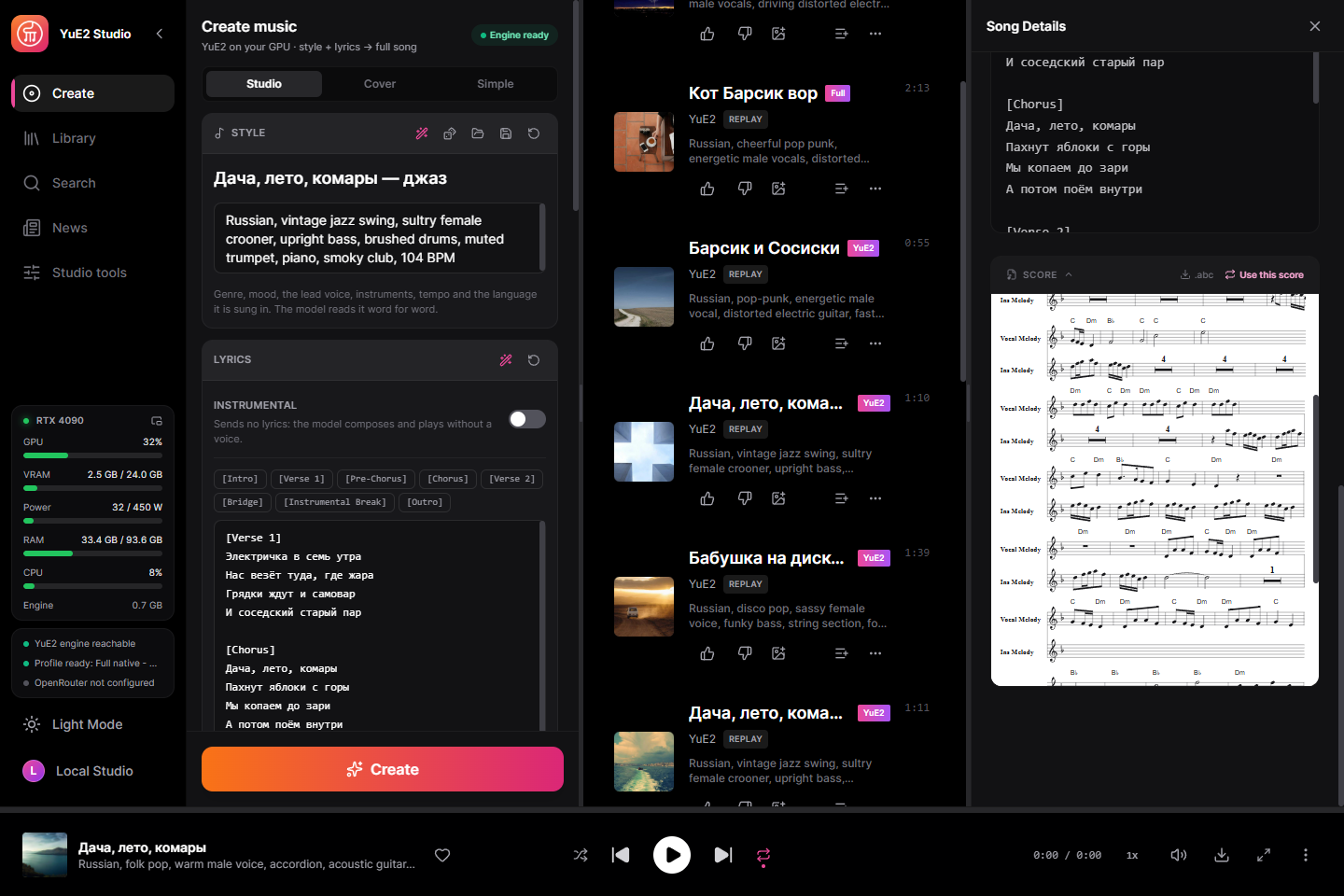 TRY NOW 5. YuE2 Studio 3.5.5YuE2 Studio is a local song workspace that combines full-song generation with an editable score, lyrics, covers, stems, MIDI, karaoke timing, audio processing, video clips, and optional LoRA training. A localhost MCP server exposes the same workflow to agents. For Jason’s catalog experiments, the distinctive test is not simply generating another track; it is changing chords or sections in the score, replaying exactly, and preserving versions as deliberate musical takes. OPERATIONAL VALUE QUICK VIDEO Reality: The Studio and yue2.cpp code are MIT, but the YuE2 model weights are CC BY-NC 4.0 with a special individual-creator permission; company commercial use needs a separate license. Other bundled models and components carry additional CC BY-NC, AGPL, Apache, MIT, and GPL terms. Windows 10/11 and 6 GB VRAM are the practical floor; NVIDIA is the tested fast path, AMD/Intel and Linux are experimental, and optional LoRA training needs newer NVIDIA hardware with about 11 GB VRAM. OPEN PRIMARY SOURCE →5 Proven ClassicsCOMFYUI MANAGER · TRY NOW
ComfyUI Manager remains the practical GPL-3.0 control surface for installing, disabling, updating, and snapshotting custom nodes. Review third-party install scripts and dependencies before letting any extension modify the environment. Source →FAISS · WORTH A LOOK
Faiss remains a focused MIT library for dense-vector search and clustering, with CPU and GPU paths. It is excellent infrastructure when you need direct control instead of a managed vector database. Source →LITGPT · WORTH A LOOK
LitGPT remains an Apache-2.0 toolkit for pretraining, fine-tuning, evaluating, and serving many LLM families. Its recipes simplify experimentation, but downloaded model weights and datasets keep their own licenses. Source →DEEPSPEED · WATCHLIST
DeepSpeed remains powerful Apache-2.0 infrastructure for distributed training, inference, offload, and parallelism. It earns a watchlist verdict for Jason because hardware, compiler, and cluster complexity outweigh casual use. Source →SCIKIT-LEARN · TRY NOW
Scikit-learn remains a dependable BSD-3-Clause foundation for classical machine learning, preprocessing, model selection, and evaluation. It is often the clearest baseline before reaching for a larger neural system. Source →Reality Checkqz is Apache-2.0; Coucou, Oil UI, New Term Radar, and YuE2 Studio publish MIT code. Those code licenses do not automatically cover Coucou’s character assets, YuE2 model weights, provider APIs, imported agent skills, browser data, music sources, generated outputs, or paid services. ComfyUI Manager is GPL-3.0, Faiss is MIT, LitGPT and DeepSpeed are Apache-2.0, and scikit-learn is BSD-3-Clause. New browser and agent tools deserve a separate profile, scoped credentials, inspected extensions, and human approval for consequential actions. Local music and model workflows still need enough disk, GPU memory, driver compatibility, backups, and a rights review for every model and source asset. Bottom LineTry Oil UI first: it is the fastest low-risk way to improve a real interface and produce a convincing side-by-side demo. If today is about the music catalog, test YuE2 Studio on a disposable copy of one short idea and judge its score editing, version retention, and stems—not just the first generation. qz is the most promising operations tool, but keep it in a separate browser profile until its permissions and data flow are comfortable. Use New Term Radar as a lead generator, never as the final source. Curated from official project repositories and documentation. Verify current terms before production use; software, services, models, and content may carry different licenses. |