|
B.Y.E. / DAILY AI TRY / 10.26.26
Be Your Evolution AI News DailyOctober 26, 2026 · Five newer tools explored, five proven classics worth keeping Top 5: New and Worth Your AttentionTRY NOW 1. Education Agent Skills 3.1.0Education Agent Skills packages 165 reusable teaching and learning workflows across 20 domains, from lesson planning and assessment to student study support. Version 3.1.0 adds a portable Agent Skills download, revises 43 skills, and records format and build checks without pretending those tests prove classroom outcomes. For Jason, the broader value is architectural: inspect how a large skill library separates instructions, evidence, policies, examples, and client-specific installation paths. OPERATIONAL VALUE QUICK VIDEO Reality: The educational content, examples, and documentation use CC BY-SA 4.0, an open-content license with attribution and share-alike obligations; do not describe it as a conventional permissive software license. Individual skill folders need no build, while optional local MCP and plugin routes add runtime and client-version requirements. The project verified packaging and selected client discovery, not automatic skill selection, teaching effectiveness, school-policy fit, or student safety. Keep educators in control, minimize personal data, inspect every installed folder, and test one skill before importing the full library. OPEN PRIMARY SOURCE →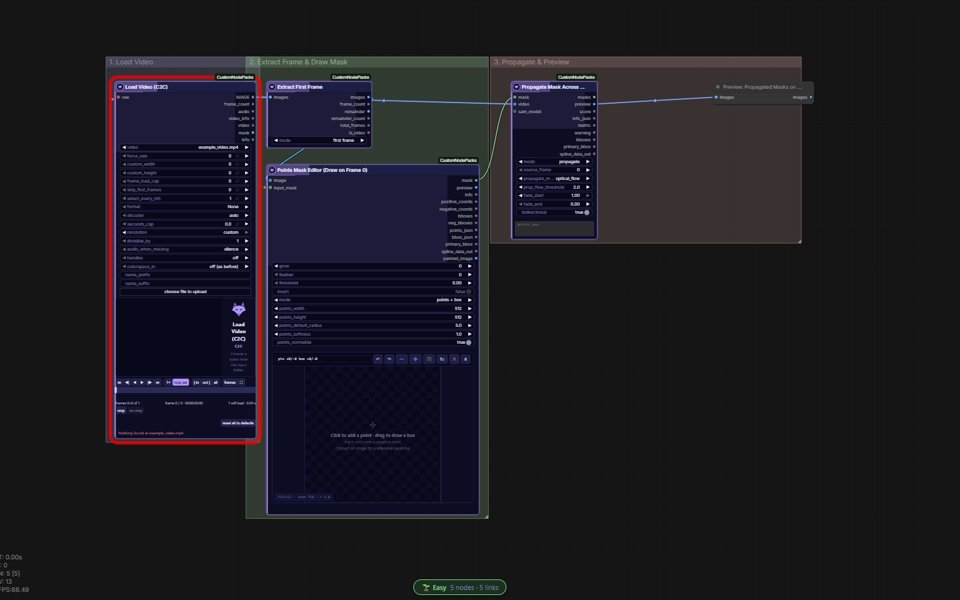 WORTH A LOOK 2. ComfyUI CustomNodePacksCode2Collapse’s current ComfyUI pack has grown into a 115-node production toolbox for mask painting, SAM segmentation, matting, crop-and-stitch inpainting, temporal propagation, color work, video comparison, and metadata-preserving export. Recent documentation covers native-resolution mask editing and frame-by-frame video handling rather than only model generation. That makes it interesting for Jason’s editable-effects library: one graph can preserve masks, handles, comparison views, export settings, and the prompt-bearing workflow inside supported video files. OPERATIONAL VALUE QUICK VIDEO Reality: The code is Apache-2.0, but models and assets retain separate terms; notably, BRIA RMBG-2.0 weights restrict commercial use without a separate license. ComfyUI Manager installation is available, yet the maintainer explicitly warns that blindly installing requirements can replace ComfyUI’s bundled Torch, NumPy, Pillow, or torchvision and break the environment. Back up workflows, use an isolated ComfyUI copy, add only missing dependencies, keep model downloads opt-in, verify every fallback label, and treat automated masks as editable proposals rather than accepted mattes. OPEN PRIMARY SOURCE →TRY NOW 3. FreeVideo 0.4.22FreeVideo turns MiniMax H3 into a cross-platform local workflow with a ComfyUI backend, launchers, an editing view, reference media, and an Autopilot chat that agents such as Codex can drive. The 0.4 line adds minute-long sequencing, timeline editing, and clearer diagnostics; 0.4.22 also lets chat messages carry reference pictures. Its strongest promise is practical accessibility: adapt weight placement and computation to machines starting around 8 GB VRAM and 16 GB system memory. OPERATIONAL VALUE QUICK VIDEO Reality: FreeVideo code is Apache-2.0, while the VDN-H3 weights use the separate MiniMax H3 Community License with territorial and acceptable-use restrictions. Windows and Linux target NVIDIA GPUs; the Apple-silicon build is a preview, and the Mac app is not yet notarized. “As little as 8 GB” is a minimum path, not a quality or speed guarantee, and setup can download large runtimes and models. Verify release hashes, isolate the installation, review model terms for your location and use, preserve source media, and expect continuity and editability limits across long sequences. OPEN PRIMARY SOURCE →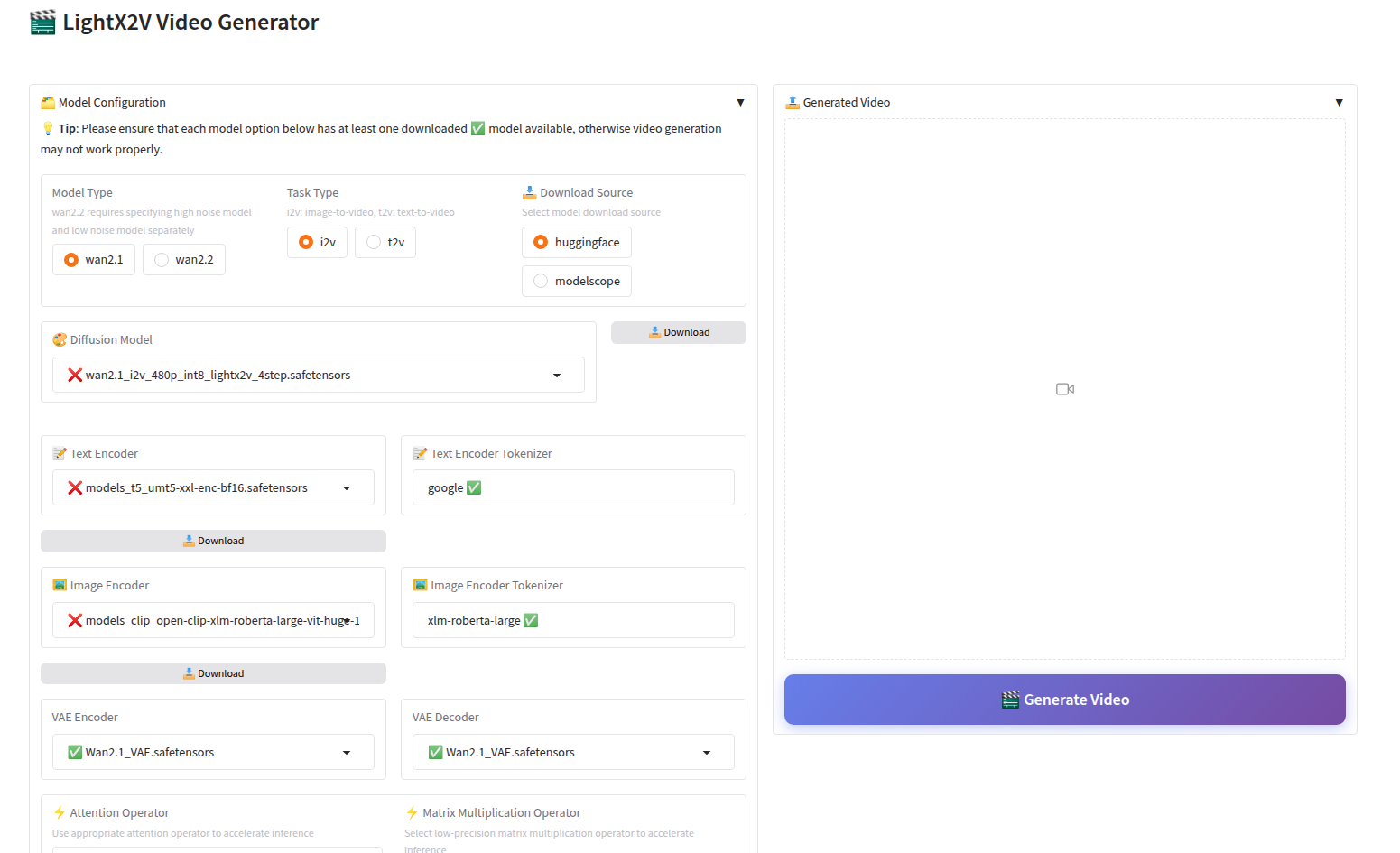 WATCHLIST 4. LightX2V 0.6.0 + Current MainLightX2V is an Apache-licensed inference framework that unifies text-to-video, image-to-video, image generation, editing, quantization, distillation, and hierarchical offloading across many model families. Current main added several autoregressive video and world-model paths on October 26, while the 0.6.0 tag remains the latest formal release. This is the engineering-heavy pick: useful for testing model backends and deployment profiles, but less suited to a polished creator workflow than FreeVideo or ComfyUI. OPERATIONAL VALUE QUICK VIDEO Reality: The framework code is Apache-2.0; every model, distilled checkpoint, quantized weight, dataset, attention kernel, and hosted service must be checked separately. The project recommends Docker, and many newest scripts target CUDA, high-end NVIDIA cards, or server hardware; repository performance statements are project-reported and workload-specific. The Mac app covers a narrower Qwen image path, not the full video stack. Pin a release or commit, follow one model-specific guide, record exact weights and hashes, and do not treat rapidly changing current-main support as a stable production API. OPEN PRIMARY SOURCE → SKIP FOR NOW 5. Phosphene 4.19.12Phosphene combines local video, images, songs, storyboards, character training, a timeline editor, and agent-facing APIs in one Apple-silicon studio. Version 4.19.12 fixes a long-running Hailuo H3 LoRA conversion bug that had weakened likeness, while preserving original LoRA files and producing corrected copies. The product direction is compelling for full-song creative work, but the present fit is poor for Jason’s Windows machine and some bundled model paths carry important regional or commercial restrictions. OPERATIONAL VALUE QUICK VIDEO Reality: Phosphene’s own code is MIT; its models are separate. Hailuo H3’s stated license excludes the United States, European Union, United Kingdom, and South Korea, while several optional image and music weights are noncommercial or impose their own output conditions. The app requires an M1-or-newer Mac, starts around 27.5 GB plus background downloads, and heavier modes need far more memory and disk. Anonymous hardware and render analytics are enabled by default but can be disabled. Do not install on Jason’s Windows system; revisit only with compatible hardware and a model-by-model rights review. OPEN PRIMARY SOURCE →5 Proven ClassicsOLLAMA · TRY NOW
Ollama remains a straightforward MIT-licensed route to running local models behind a consistent API. Model files keep separate terms, and memory, context, quantization, and tool behavior still need testing. Source →COMFYUI · TRY NOW
ComfyUI remains the most flexible graph workspace for reproducible image and video pipelines. Its GPL-3.0 code, custom nodes, model weights, assets, and generated outputs each require separate review. Source →AIDER · WORTH A LOOK
Aider remains a focused Apache-2.0 terminal coding partner with Git-aware edits and broad model support. Provider costs, repository permissions, prompt leakage, tests, and review remain the operator’s responsibility. Source →HUGGING FACE TRANSFORMERS · WORTH A LOOK
Transformers remains an Apache-2.0 standard library for loading and training many model architectures. The library license never replaces each checkpoint’s model card, data provenance, hardware needs, or usage restrictions. Source →OPEN INTERPRETER · WATCHLIST
Open Interpreter remains a powerful Apache-2.0 bridge between language models and local code execution. Its authority makes sandboxing, command inspection, credentials, backups, network limits, and explicit confirmation essential. Source →Reality CheckOpen code is only one layer of the decision. Education Agent Skills is openly licensed instruction content with share-alike obligations; ComfyUI CustomNodePacks can combine Apache code with restricted model weights; FreeVideo and LightX2V rely on model families whose terms and hardware paths vary; and Phosphene’s most interesting H3 route is unavailable in several regions, including the United States. Preserve source media, prompts, seeds, workflow files, weight names, hashes, licenses, and acceptance notes. Use isolated environments, keep downloads opt-in, measure on your own hardware, and never confuse a successful render with identity, lip-sync, continuity, factual, or commercial acceptance. Bottom LineTry Education Agent Skills first as a packaging study: copy one complete skill, inspect its evidence and policy boundaries, and compare it with your own reusable creative skills. For a visual result, test FreeVideo in a disposable Windows ComfyUI installation with one short, cleared three-shot sequence and a written model-license check. Keep CustomNodePacks as the follow-on editing layer, LightX2V as an engineering benchmark, and Phosphene off the Windows machine. Curated from official project repositories and documentation. Verify current terms before production use; software, services, models, data, and content may carry different licenses. |